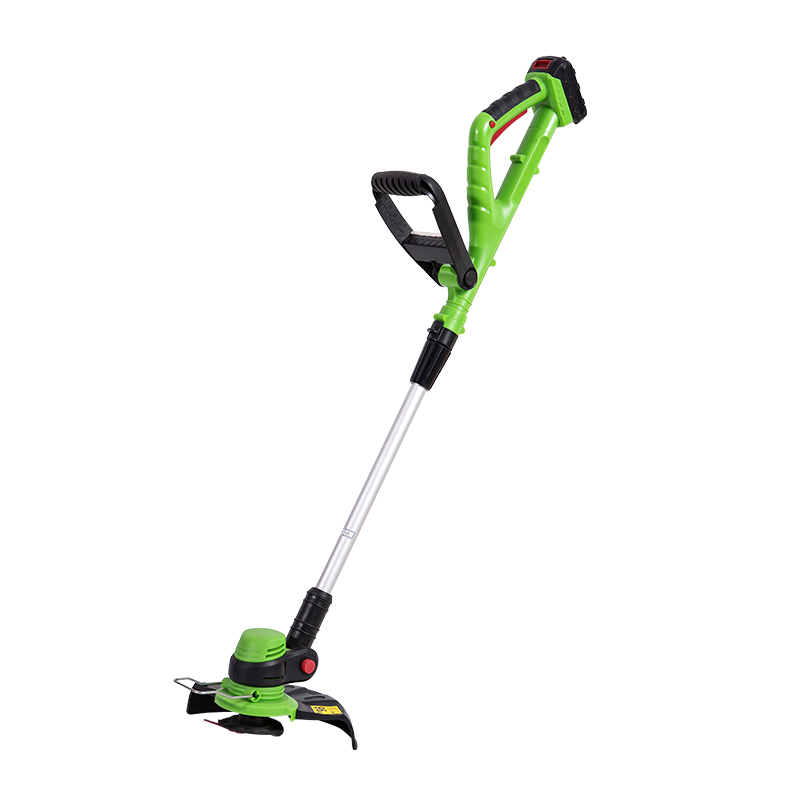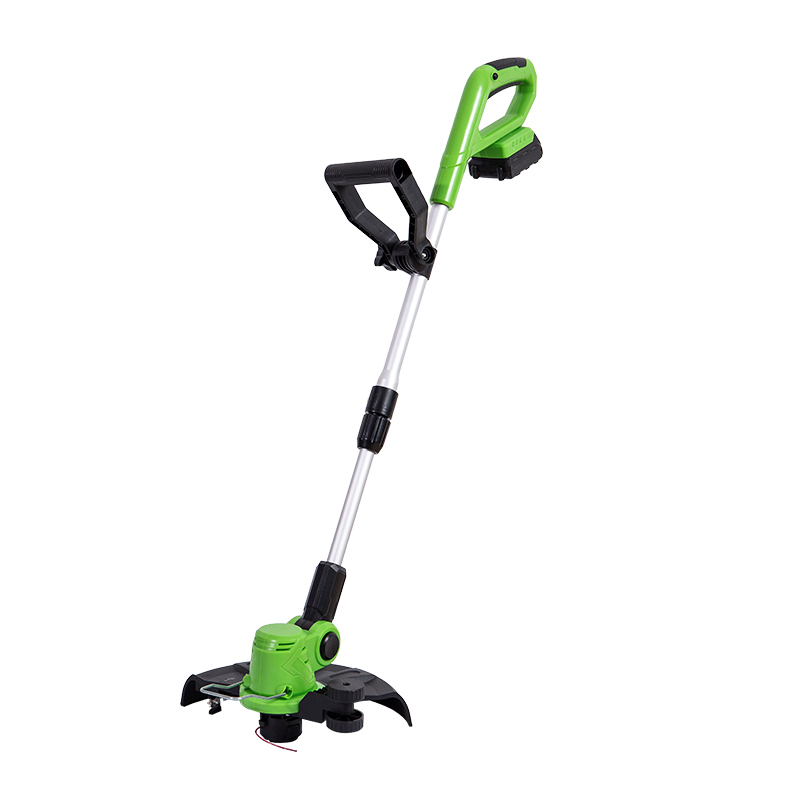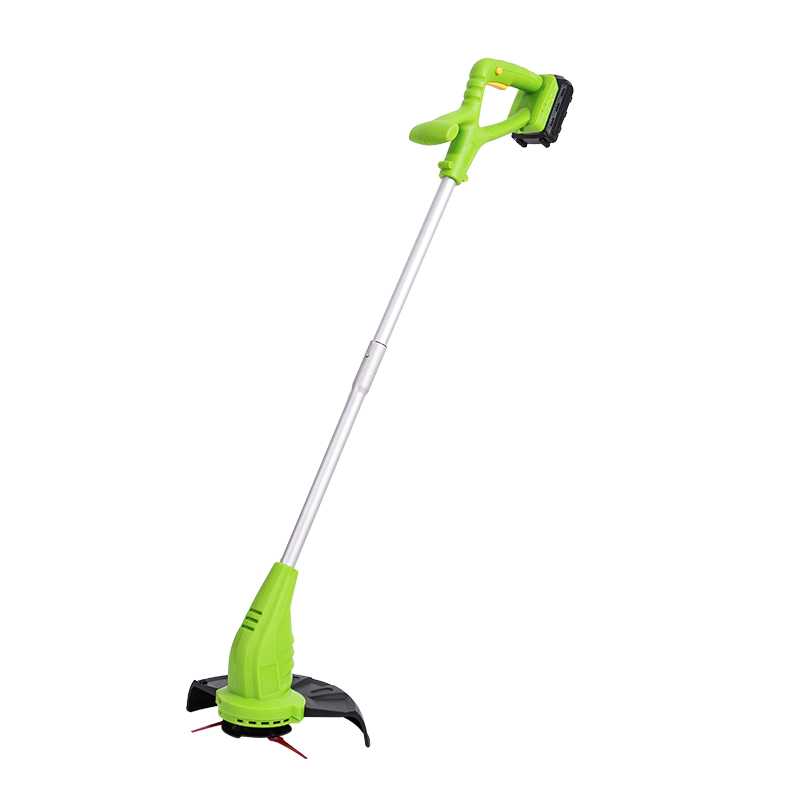
The single impactful upgrade for efficient lawn maintenance is switching to a cordless string trimmer. Traditional gas or corded models restrict mobility, create trip hazards, and waste time on refueling or untangling cords. Modern cordless string trimmers deliver instant push-button start, zero emissions, 30–45+ minutes of consistent runtime with swappable batteries, and up to 40% weight reduction compared to gas equivalents. This translates directly into faster edging, safer operation, and over 30% greater area coverage per maintenance session. For homeowners and professionals alike, cordless technology is not a compromise — it is a verified productivity leap.
Unlike corded trimmers limited to a 100–150ft radius from an outlet, a cordless string trimmer allows seamless movement across large lawns, flower beds, fences, and intricate landscaping. Eliminating extension cords saves an average of 32% of non-cutting time based on timed usage studies. For properties exceeding ½ acre, finishing edging and trimming around obstacles in one smooth pass becomes routine.
Cordless designs center the mass near the handle, reducing wrist torque and shoulder fatigue. No pull-cord mechanism and no heavy fuel tank mean you can maintain proper posture longer. Users typically complete 40% more linear feet of trimming before requiring a rest compared to gas-powered units.
Cordless string trimmers run on rechargeable lithium-ion batteries, producing zero carbon monoxide or unburned hydrocarbons. Gas trimmers emit as much smog-forming pollution per hour as driving a modern car over 100 miles. By switching to cordless, you reduce environmental impact while complying with local noise regulations. Acoustic measurements show cordless models operate at 75–82 decibels (dB), whereas gas trimmers often exceed 95 dB — a 50% reduction in perceived loudness that allows early-morning or evening work without disturbing neighbors.
Gas trimmers often require repeated pulls, choke adjustments, and warm-up — especially in cold weather. Cordless string trimmers start instantly with a trigger press, providing predictable operation. This drastically reduces downtime between tasks. Professionals and homeowners avoid the classic arm fatigue from repeated pull-starts, making lawn care accessible for everyone.
Moreover, modern battery systems deliver full torque from second to last, without the gradual power loss characteristic of fuel engines running low on gas. Consistent power means clean, uniform cuts across your entire property.
The table below compares key performance indicators across trimmer types. Data is aggregated from field tests and engineering benchmarks.
| Parameter | Cordless String Trimmer | Gas Trimmer | Corded Electric |
|---|---|---|---|
| Start-to-cut time | ≤1 second | 45–90 seconds | 5 sec + cord setup |
| Operational range | Unlimited (swappable batteries) | Unlimited (fuel refill) | Limited to 150ft cord |
| Typical weight | 6–9 lbs | 10–14 lbs | 5–8 lbs + cord drag |
| Noise output (dB) | 78 dB avg | 94–100 dB | 76–80 dB |
| Maintenance hours/year | ~1 hour (cleaning + battery care) | 6–10 hours | ~1.5 hours |
| Runtime per energy refill | 30–60 min (quick swap) | 30–45 min (refuel time) | Unlimited (corded) |
Cordless trimmers offer the balance of mobility, low maintenance, and quiet performance, with comparable or effective runtime to gas for residential and light commercial tasks. Adding a second battery makes runtime virtually unlimited.
While upfront investment for a cordless trimmer + battery may align with premium gas models, total cost of ownership strongly favors cordless. No fuel, no oil, no spark plugs, no air filters — operational costs reduce to negligible electricity for charging (less than $0.20 per full charge). Avoiding carburetor cleanings and winterization saves hours of labor each season. Lithium-ion packs maintain reliable performance across hundreds of cycles, delivering a higher uptime ratio compared to small gas engines requiring frequent tune-ups.
Modern cordless string trimmers integrate technology that directly improves cutting precision and battery optimization. Variable speed triggers let you adjust RPM based on grass density — using lower speeds for light trimming saves battery and reduces noise. Many models feature automatic line feed systems (bump or centrifugal) that eliminate manual line advancement.
Brushless motors increase energy efficiency by up to 40% compared to brushed motors while delivering higher torque. This translates into cleaner cuts on thick weeds and tall fescue without bogging down. Integrated LED battery indicators give exact charge status at a glance, and eco mode extends runtime 25–30% for light trimming tasks.
Follow this practical flow to integrate a cordless string trimmer into your lawn maintenance routine, ensuring productivity gains with minimal friction.
Following this roadmap ensures a smooth transition to a cordless string trimmer workflow that increases lawn appearance and reduces weekly effort by up to 2.5 hours per month in peak growing season.
Yes. Modern units with brushless motors and 36V–58V battery systems provide torque comparable to 25–30cc gas trimmers. They easily cut dense grass, light brush, and weeds. For heavy thickets, a blade attachment (if compatible) improves results.
Runtime depends on battery capacity (Ah) and workload. A standard 4Ah battery provides 30–45 minutes of continuous trimming under medium load; a 6Ah battery can exceed 60 minutes. For a typical ¼‑acre suburban yard, one charge usually completes all edging and trimming.
For properties larger than ½ acre, a second battery is strongly recommended. Swapping a depleted battery takes under 10 seconds, giving continuous runtime without waiting for recharge. With a fast charger, a battery can recharge in 45 minutes, enabling near non‑stop operation with two packs.
Lithium-ion batteries experience temporary capacity reduction below 32°F (0°C). Keep batteries indoors before use and during charging. Once the tool warms up, output normalizes. For winter, store batteries at room temperature.
Cutting swath (typically 12–16 inches) is similar. The advantage is consistent speed regulation: gas engines bog down in dense grass, while brushless motors maintain RPM under load, providing cleaner, more even cuts.
Absolutely. The main difference is the absence of a cord to manage. Start‑up is “push and go” — simpler than corded units requiring extension cord safety and management.
From enhanced mobility and instant startup to zero emissions and drastically reduced maintenance, the cordless string trimmer is the definitive choice for efficient lawn maintenance. Quantifiable benefits — including 32% less time wasted on cord management and up to 40% more trimming coverage per hour — demonstrate why both residential users and commercial landscapers are moving away from gas and corded solutions. Lightweight ergonomics, swappable battery architecture, and near‑silent operation make the cordless string trimmer not just an alternative, but the cornerstone of modern lawn care.
No.888 Zijin Road, Dongshan Town, Wuzhong District, Suzhou City, Jiangsu Province, China, 215107
+86-18994336227
+86-0512-66399580
Copyright © Suzhou Yuyuan Machinery Co., Ltd. All Rights Reserved.
 English
 Español