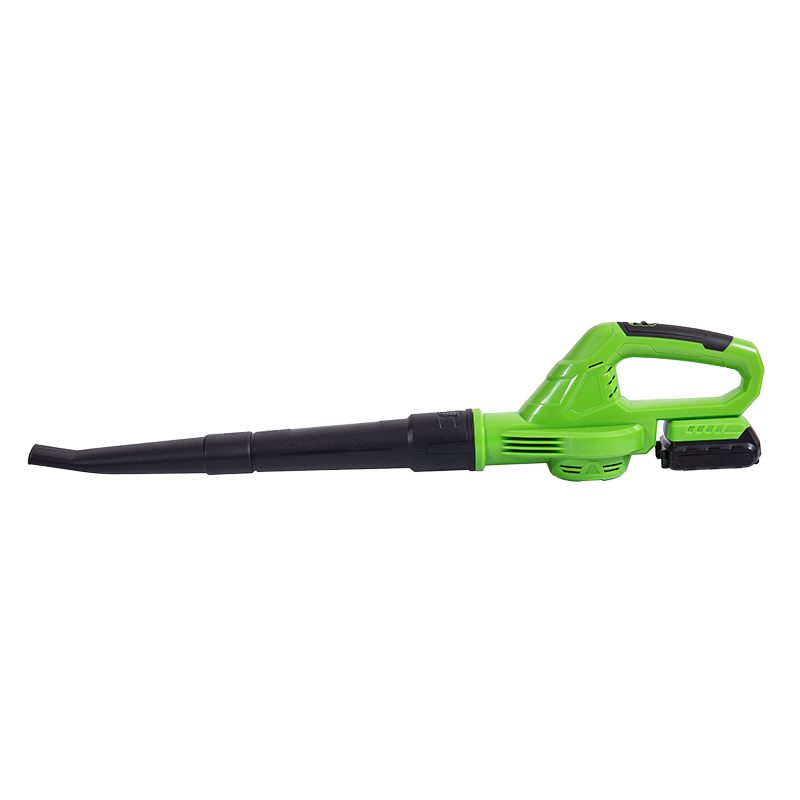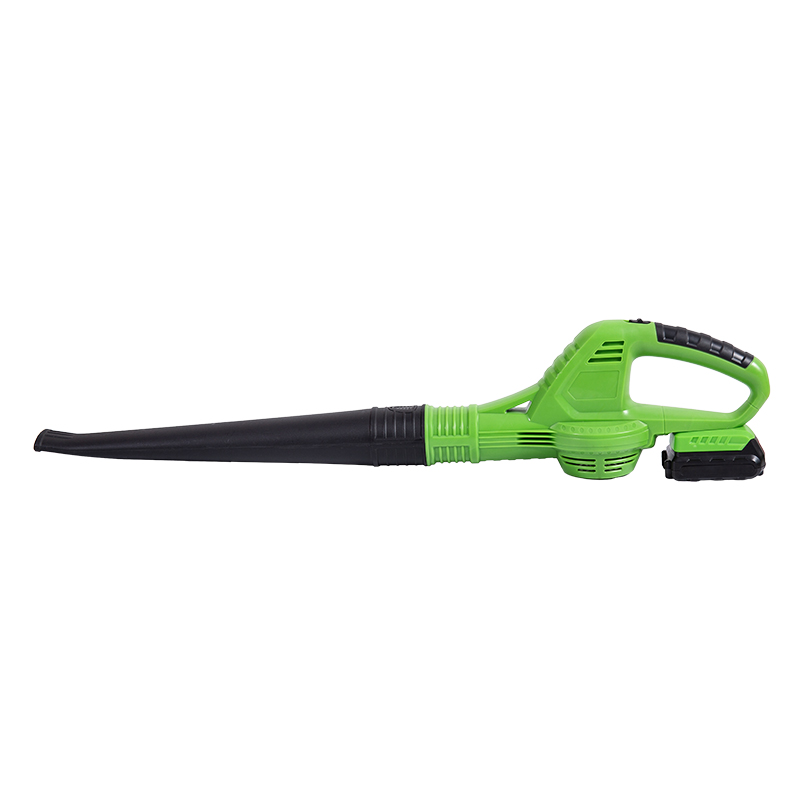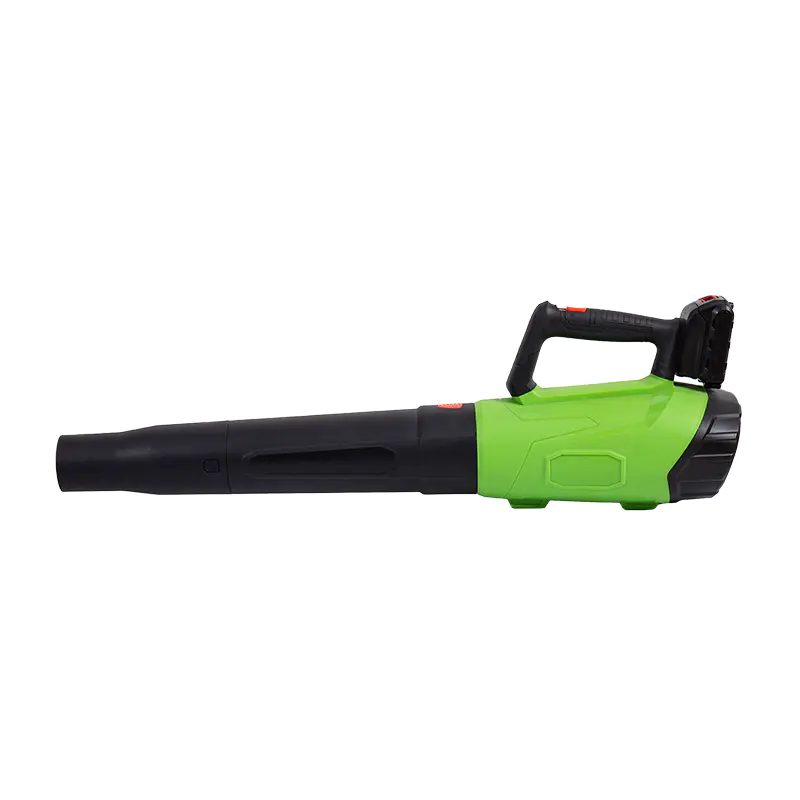
If you are tired of wrestling with extension cords, limited reach, and the constant risk of unplugging mid-task, a cordless leaf blower is the definitive solution. Modern cordless leaf blowers offer up to 60 minutes of runtime and air speeds exceeding 120 MPH, making them a genuine alternative to corded or gas-powered models for residential yards. The key is matching the blower's specifications to your property size and leaf load.
Switching to a cordless leaf blower eliminates three major pain points: cord management, power outlet availability, and mobility restrictions. Average cordless models can clear a 1,000 sq ft lawn of light debris in under 15 minutes, while higher-end units handle wet leaves and gravel with ease. Below is a quick comparison of what you gain versus corded alternatives:
Not all cordless leaf blowers perform equally. To avoid disappointment, focus on three measurable metrics that directly affect yard work efficiency.
40V to 60V systems provide the power-to-weight ratio. A 20V blower may work for patios and driveways but struggles with wet leaves or thick grass clippings. Lithium-ion batteries with at least 4.0Ah capacity ensure consistent power delivery until the last minute of runtime.
CFM (cubic feet per minute) measures air volume, while MPH measures air speed. For moving piles of leaves, high CFM (400+) is crucial. For dislodging wet leaves stuck to pavement, high MPH (120+) works better. The ideal cordless blower balances both: look for models with at least 450 CFM and 110 MPH for versatile residential use.
Advertised runtimes often reflect the speed setting. For practical use, here is what you can expect from a quality cordless leaf blower based on independent testing:
A typical suburban lawn of 2,000 sq ft requires 20-25 minutes of turbo mode to clear heavy autumn leaf coverage. Plan for either a high-capacity battery (6.0Ah or more) or a second battery in the charger.
Understanding the strengths and limitations prevents over- or under-investing in a cordless solution.
| Best Use Cases | Less Suitable Scenarios |
|---|---|
| Yards up to ½ acre with standard deciduous trees | Large estates with constant heavy leaf fall (gas still wins) |
| Quick daily cleanup of driveways, decks, and patios | Commercial landscaping with back-to-back jobs |
| Clearing gutters (with lightweight attachment) | Moving deep piles of standing water or heavy snow |
| Homes with noise restrictions or close neighbors | All-day continuous operation without charging breaks |
One of the underrated advantages of cordless leaf blowers is their low maintenance. There is no fuel mixing, carburetor cleaning, spark plug replacement, or pull-start frustration. With proper care, a cordless blower’s motor will outlast the battery (typically 3-5 years of regular use). To maximize lifespan:
Use this simple decision framework to select the right cordless leaf blower without overspending or ending up underpowered.
Remember that the total cost of a cordless system includes the charger and batteries. If you already own power tools from a common platform, a bare tool (blower only) can save you 30-50%.
No.888 Zijin Road, Dongshan Town, Wuzhong District, Suzhou City, Jiangsu Province, China, 215107
+86-18994336227
+86-0512-66399580
Copyright © Suzhou Yuyuan Machinery Co., Ltd. All Rights Reserved.
 English
 Español