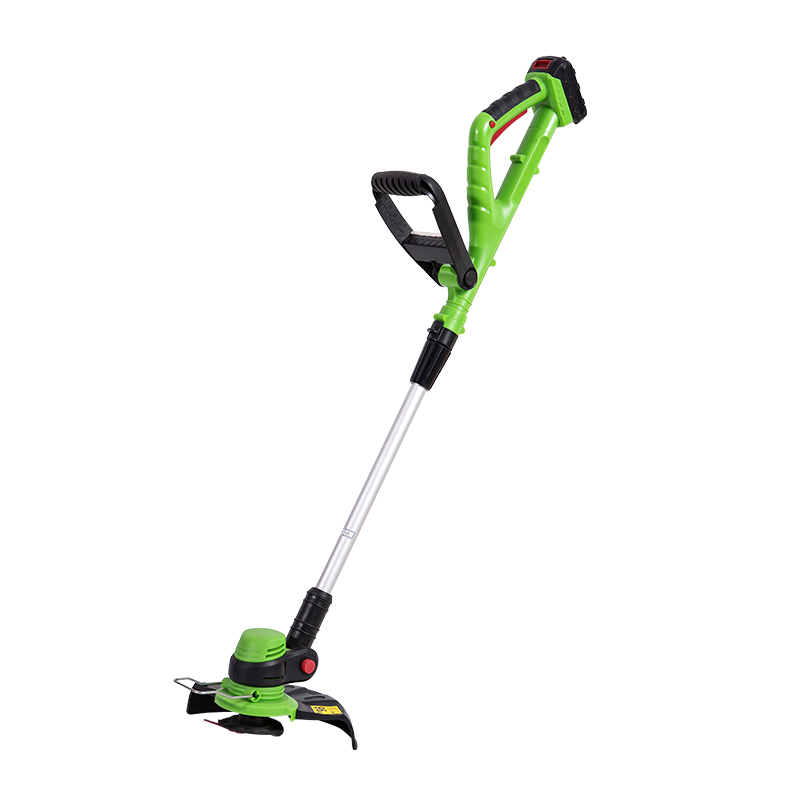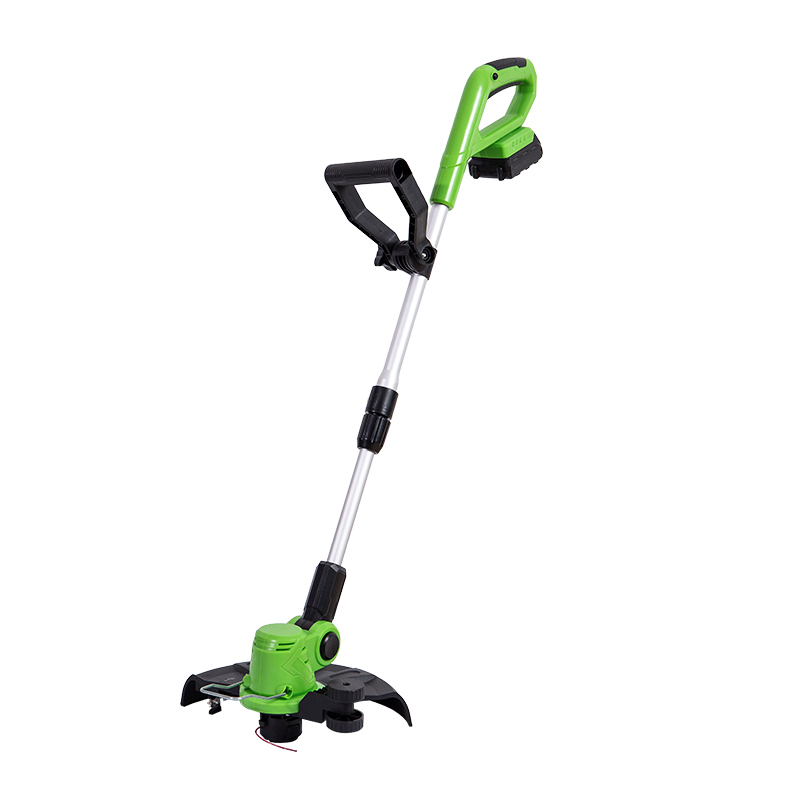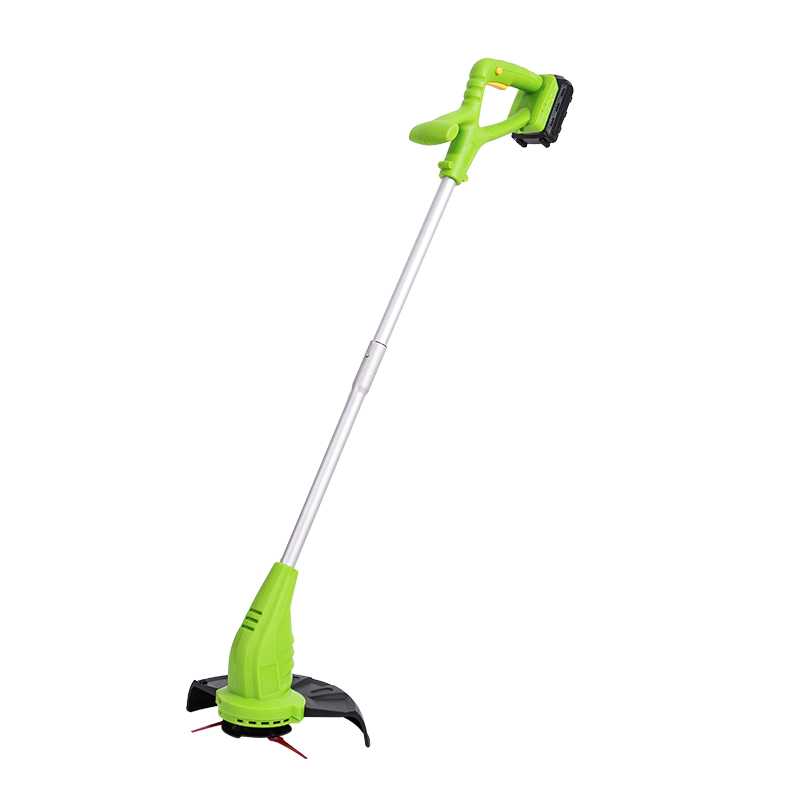
A cordless string trimmer is no longer the compromise tool it was a decade ago. Early battery models were light-duty edge cleaners at best, useful for softening the line along a driveway but powerless against anything with a woody stem. That era is over. Modern battery-powered string trimmers run on 40V to 80V platforms, spin 0.080 inch to 0.105 inch line, and hold torque under load long enough to clear fence lines, drainage ditches, and overgrown property borders without a gas can, a pull cord, or a carburetor rebuild in spring.
The shift is practical, not emotional. A battery-powered string trimmer starts instantly, runs without exhaust fumes, needs no oil mix, and stores indoors without a fuel smell. For homeowners who trim for 10 to 40 minutes at a time, the runtime argument that once favored gas has largely collapsed. The real problem today is not whether to go cordless. It is choosing the wrong cordless model because the marketing spec sheet emphasizes the wrong number.
That wrong number is almost always voltage. Voltage is the easiest figure to print on a box, so it becomes the headline. But voltage only defines the battery platform. It does not define how much grass the trimmer can actually cut, how thick a stem it can sever, or how long it will run before the battery sags. The two specifications that decide real cutting ability are line diameter and motor type. A 40V trimmer with 0.095 inch line and a brushless motor will out-cut a 60V trimmer with 0.065 inch line and a brushed motor in tall, stemmy weeds every single time. Understanding that hierarchy is the difference between buying a tool that frustrates you and buying one that finishes the job.
Most buying guides list a dozen features and rank them equally. That is unhelpful. In practice, six specifications determine whether a trimmer will handle your yard or stall in it. The table below summarizes the decision thresholds, and the sections that follow explain each one with the nuance that a simple spec table cannot carry.
| Specification | Light Duty | Standard Residential | Heavy / Overgrown |
|---|---|---|---|
| Voltage | 24V to 40V | 40V to 60V | 80V |
| Line Diameter | 0.065 in to 0.080 in | 0.080 in to 0.095 in | 0.095 in to 0.105 in |
| Cutting Swath | 12 in to 14 in | 14 in to 16 in | 16 in to 17 in |
| Motor Type | Brushed acceptable | Brushless preferred | Brushless required |
| Feed System | Bump feed | Bump feed | Bump feed or manual |
| Weight With Battery | Under 6 lb | 7 lb to 9 lb | 10 lb and above |
Voltage sets the battery platform. Once you buy into a platform, every subsequent tool, whether a leaf blower, hedge trimmer, chainsaw, or mower, must use the same battery family. That is the hidden cost. A cheap 24V trimmer with a single battery and no other tools in the line is not a bargain if you later need a blower and must buy into a second platform.
The practical voltage bands are straightforward. A 24V to 40V trimmer suits small yards where trimming takes 5 to 15 minutes and grass is soft and recently mowed. A 40V to 60V unit is the sweet spot for standard suburban lots with weekly trimming, some fence lines, and occasional tall patches. An 80V trimmer is the true gas replacement, capable of sustained work in dense weeds, blackberry canes, and neglected borders.
The critical insight is that voltage does not linearly predict cutting power. A 60V trimmer with a brushed motor and 0.065 inch line will bog down in thick grass, while a well-designed 40V brushless unit with 0.095 inch line will keep spinning. Voltage determines the ceiling of the platform. Line diameter and motor efficiency determine how close you actually get to that ceiling.
Line diameter is the most underrated specification in the entire category. It is the physical thickness of the nylon string that spins and strikes the vegetation. A thicker line carries more mass at the tip, which means more kinetic energy at the point of impact. That energy is what severs a stem. Voltage can spin the head, but line diameter decides whether the string snaps on contact or cuts through.
The thresholds are well established in field testing. A 0.065 inch line is for soft grass and light edging only. It will break repeatedly against dandelion stems and small woody weeds. A 0.080 inch line is the standard residential choice, adequate for most lawn edges and thin weeds. A 0.095 inch line is the first diameter that reliably handles thick-stemmed weeds, thistle, and small saplings. A 0.105 inch line is commercial-grade, used in roadside and municipal work, and it requires a trimmer head and motor specifically designed to handle the added rotational mass.
There is a hard rule that saves motors: never install a line thicker than the trimmer is rated for. A 0.105 inch line in a 24V trimmer with a brushed motor will overload the motor, generate excessive heat, and either trip a thermal cutoff or burn the windings. The line does not make the trimmer more powerful. It makes the trimmer work harder, and the motor pays the price.
Cutting swath is the diameter of the circle the line sweeps. A wider swath covers more ground per pass, which matters in open areas. A narrower swath reaches into tight spaces and around obstacles without scalping the lawn or nicking fence posts.
The trade-off is real. A 12 to 14 inch swath is ideal for precise edging along sidewalks, driveways, and flower beds, and it excels in yards with many obstacles such as trees, shrubs, and fences. A 15 to 17 inch swath is faster for large, open areas with few obstructions. If your yard is mostly open lawn with a long fence line, a wider swath saves time. If your yard is a collection of beds, paths, and tight corners, a narrower swath is actually more efficient because you spend less time repositioning and repairing scalped turf.
Brushed motors use carbon brushes that physically contact a rotating commutator. They are inexpensive to manufacture and adequate for light, intermittent use. Their weaknesses appear under sustained load. The brushes wear down, efficiency drops, heat builds, and many brushed trimmers include a thermal cutoff that shuts the tool down mid-job to prevent damage. In thick grass, that shutdown is not a defect. It is the motor protecting itself from the workload it was never designed to handle.
A brushless motor eliminates the brushes and uses electronic commutation. The practical results are measurable. Brushless designs typically deliver 25 to 30 percent more torque at the cutting head, run cooler, and last two to three times longer in equivalent use. More importantly, a brushless motor holds its speed under load. When the line hits a thick stem, a brushed motor slows and heats, while a brushless motor maintains rpm and cuts through. For anyone dealing with dense weeds or running the trimmer for more than 15 minutes at a time, brushless is the single most consequential upgrade.
The feed system advances line as it wears. Bump feed is the mainstream choice. You tap the head against the ground while the trimmer spins, and a fresh length of line advances. It is simple, reliable, and gives the operator direct control over line length. Auto feed advances line automatically through a mechanism that senses wear or uses a timed release. It reduces interruptions but can waste line and sometimes advances more than needed. Manual feed requires stopping the trimmer and pulling line by hand. It is now largely limited to specialty heads and commercial units.
For most homeowners, bump feed is the better choice. It is predictable, easy to reload, and does not depend on a complex internal mechanism that can jam. A button-based feed system, found on some lightweight models, is a variation that appeals to users who find bumping awkward or who have limited hand strength. It is worth considering for anyone who struggles with repetitive tapping motions.
Published trimmer weights are frequently misleading. Many manufacturers list the bare tool weight, excluding the battery. A battery can add 1.5 to 3 pounds, which is significant when the trimmer is held at an angle for 20 minutes. Always confirm whether the stated weight includes the battery.
Ergonomics extend beyond raw weight. A balanced trimmer with a comfortable front handle, a adjustable shaft, and a well-placed trigger reduces fatigue. For users with limited upper body strength or shoulder issues, a trimmer under 6 pounds with the battery installed is a meaningful threshold. Above 9 pounds, the tool becomes a two-handed, deliberate operation, which is fine for heavy clearing but tiring for routine edging.
Specifications only matter when they are mapped to a real yard. The table below converts the six parameters into three common yard profiles. Find the row that matches your property, and the recommended range becomes a shortlist rather than a catalog.
| Yard Type | Recommended Voltage | Line Diameter | Cutting Swath | Positioning |
|---|---|---|---|---|
| Townhome or small yard, 5 to 15 minutes per session | 24V to 40V | 0.065 in to 0.080 in | 12 in to 14 in | Lightweight, low cost, easy storage |
| Standard suburban yard, weekly use | 40V to 60V | 0.080 in to 0.095 in | 14 in to 16 in | Balanced performance and value |
| Half acre or more, heavy weeds | 80V | 0.095 in to 0.105 in | 16 in to 17 in | Gas replacement class |
Two nuances are worth adding. First, yard size alone does not determine the correct row. Weed density matters just as much. A small yard with a neglected border of thick, stalky weeds may need a 60V brushless trimmer more than a large, manicured lawn needs an 80V unit. Second, the battery platform should be considered alongside the trimmer. If you already own a battery from a particular platform, the cost of a bare tool is far lower than a kit with a new battery and charger. If you are starting fresh, choose a platform that offers the other tools you will eventually need.
If you are unsure which row applies to your property, or you want to know which current model offers the best value within your budget, you can contact us directly for a quote comparison tailored to your specific yard conditions and trimming frequency.
The following two profiles illustrate how the specifications above translate into real tools. They are not the only options, but they represent two distinct design philosophies: the lightweight budget trimmer and the heavy-duty gas replacement.
This category is defined by a sub-6-pound weight, a 20V to 40V battery, and a 10 to 12 inch cutting swath. The appeal is portability and price. A trimmer in this class is easy to lift, easy to store, and easy to use for short edging sessions. The trade-off is capacity. A 10 inch swath requires more passes, and a 0.065 inch line will struggle with anything thicker than soft grass. A button-based feed system is common here and is genuinely helpful for users who dislike bumping the head. This profile suits townhome owners, older users, and anyone whose trimming is limited to clean edges along a driveway and a few foundation plantings.
This category is defined by an 80V battery, a brushless motor, a 0.095 inch line, and a 16 to 17 inch swath. It is designed for sustained work in dense vegetation. The brushless motor maintains torque under load, the larger line severs thick stems, and the wider swath clears ground quickly. Runtime is shorter than a gas tank, but for most residential properties the battery capacity is sufficient for a full trimming session. This profile is the correct choice for properties of half an acre or more, for anyone clearing neglected areas, and for users who previously relied on gas trimmers and do not want to compromise on cutting power.
Yes, but only under specific conditions. The trimmer needs at least 60V, a line diameter of 0.080 inch or greater, and preferably a brushless motor. A 40V trimmer with 0.065 inch line will not cut thick weeds reliably, regardless of the voltage marketing. The line will break, the motor will heat, and the job will take far longer than expected. For serious weed clearing, the minimum practical configuration is 60V, 0.095 inch line, and a brushless motor.
Do not trust a single runtime number. Battery life depends entirely on load. In light grass, a 4.0Ah battery might run for 45 minutes. In dense, thick weeds, the same battery may last only 20 minutes because the motor draws more current under load. Manufacturer runtime claims are often measured in light conditions. If your trimming involves heavy vegetation, plan for roughly half the stated runtime, and consider a second battery or a higher-capacity pack.
For most homeowners, bump feed is more reliable and more controllable. It advances line only when you choose, which reduces waste and keeps line length consistent. Auto feed is convenient but can advance line unnecessarily, and the mechanism adds complexity that can jam or wear out. Manual feed is largely obsolete for residential use. A button-based feed system is a good alternative for users who find bumping difficult.
Match the voltage to your yard profile. A small townhome yard with light trimming needs 24V to 40V. A standard suburban yard with weekly trimming and some tall patches needs 40V to 60V. A half-acre property or any yard with dense, overgrown weeds needs 80V. If you are between categories, choose the higher voltage and the thicker line, because a trimmer that is slightly overpowered for light grass is far less frustrating than one that stalls in thick weeds.
No. A wider swath covers more ground in open areas, but it is less maneuverable around obstacles. In a yard with trees, beds, fences, and tight corners, a narrower swath of 12 to 14 inches often results in faster overall completion because you spend less time repositioning and repairing scalped areas. Choose the swath based on the layout of your yard, not just its total area.
Comparing dozens of models by spec sheet is slow and often misleading. The faster path is to describe your yard and your trimming conditions. Tell us your approximate yard size, the severity of the weeds you need to cut, whether you trim weekly or only a few times per season, and your budget range. We will match two or three cordless string trimmers to your situation and provide current pricing so you can compare real options instead of guessing from voltage alone.
Use the contact form on this page or reach out directly with your yard details. The more specific you are about weed density and trimming frequency, the more precise the recommendation will be.
No.888 Zijin Road, Dongshan Town, Wuzhong District, Suzhou City, Jiangsu Province, China, 215107
+86-18994336227
+86-0512-66399580
Copyright © Suzhou Yuyuan Machinery Co., Ltd. All Rights Reserved.
 English
 Español