Most owners treat an electric mower as a sealed appliance. They buy it, use it, and only think about parts when something breaks. That habit is expensive. A wrong blade or an incompatible battery can push the motor, the controller, or the charging circuit beyond its design limits long before the machine reaches the end of its expected service life.
The numbers explain the risk. A typical walk-behind electric mower draws between 1,000 and 1,800 watts under load. When a dull or unbalanced blade is fitted, the motor must compensate with higher current, and internal temperatures rise quickly. Over a single season, that extra heat shortens the life of the motor windings and the control board. In many repair cases, the cost of replacing those two components is more than half the price of a new unit.
That is why this guide focuses on selection logic rather than a simple list. Search traffic for electric lawn mower accessories comes mostly from people in the consideration or decision stage. They already own a mower, they need a replacement, and they want to know which part will fit before they pay. The sections below answer that question with measurements, compatibility rules, and maintenance data.
Quick fact: Replacement blades and batteries together account for more than 60 percent of aftermarket accessory spending on electric mowers. Getting those two categories right solves most compatibility problems before they start.
Blades are the most returned accessory in the electric mower category. The reason is simple: buyers search by machine model, but blades are defined by physical geometry. Two mowers from the same brand and similar model year can use different blade mounts. Two mowers from different brands can share the same mount.
The center hole is the single most important dimension. If the hole does not match the spindle, the blade will not seat correctly, and an incorrectly seated blade is a safety hazard.
| Hole Type | Shape Description | Common Fit Issue |
|---|---|---|
| Round | Simple circular opening | May spin if bolt torque is low |
| Star | Multi-point toothed opening | Will not mount on round spindle |
| Butterfly | Two opposed notches | Often confused with star patterns |
Measure the old blade before ordering. Use calipers for the center hole diameter and a ruler for the overall length. Record the blade thickness as well, because a blade that is too thin will not clamp securely, and one that is too thick may contact the deck.
Electric mowers are power-limited. The blade you choose changes how much of that limited power goes into cutting grass versus moving air.
If your machine already struggles to finish a normal cut on one charge, moving to a high-lift blade will make that problem worse. In that situation, the better purchase order is a second battery first, then a blade upgrade.
Battery accessories carry the highest margin and the highest compatibility risk. A battery that looks identical to the original can have a different cell arrangement, a different connector key, or a different communication protocol. Any of those differences can prevent charging or cause the mower to shut down under load.
Never mix voltages across a platform. A 40V battery must not be used in a 60V mower, and a 60V battery must not be forced into a 40V tool. The mower controller expects a specific input range, and the charger expects a specific pack configuration. Crossing that boundary can damage the battery management system or the charger.
Capacity, measured in amp-hours, determines how long the mower runs. A higher-capacity pack adds runtime but also adds weight. For push mowers, weight matters because the operator carries it. For self-propelled mowers, the extra weight is less noticeable but still affects battery bay fit.
| Specification | What It Controls | Matching Rule |
|---|---|---|
| Voltage | Motor and controller input | Must equal original |
| Amp-hours | Runtime | Equal or higher is safe |
| Connector | Physical fit and polarity | Must match exactly |
Lithium-ion packs used in mowers typically deliver useful capacity for three to five years, depending on charge cycles and storage temperature. Replace the pack when you notice one or more of these signals:
Not every accessory is a blade or a battery. Trimmer spools, mulching kits, and deck attachments also wear out or get lost, and they are often bought together with the main accessories.
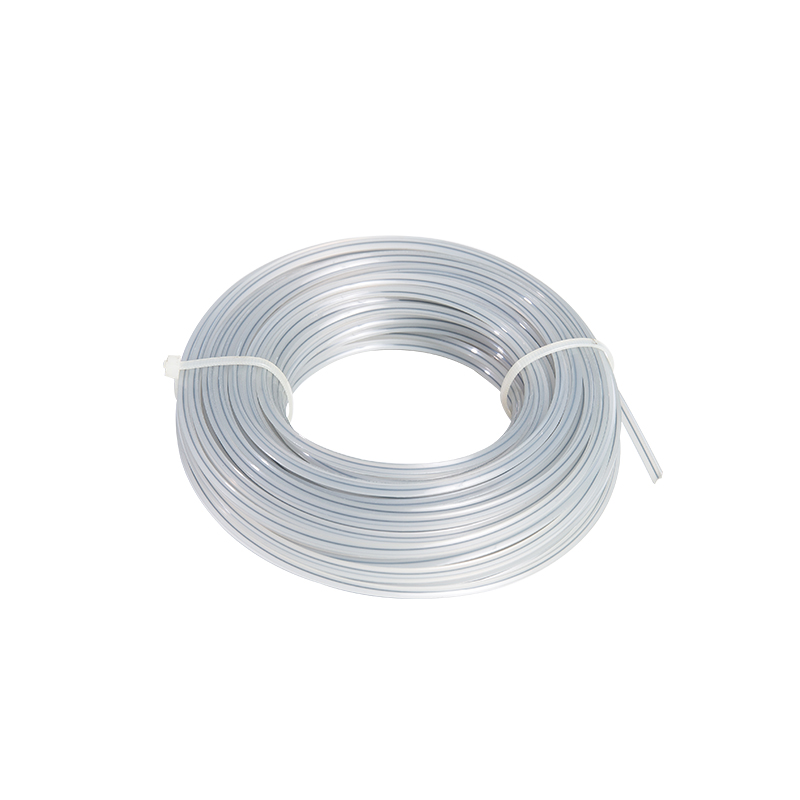
For combination kits that include a string trimmer, the spool is a consumable. Line diameter, spool geometry, and the cap retention system must match. A spool that is too tall will not seat, and one that is too short will release line unevenly.
A mulching kit usually includes a specialized blade and a plug or insert that blocks the side discharge opening. Without that plug, clippings escape through the side and the mulching action is lost. When ordering a kit, confirm that the plug matches your deck shape.
Most returns happen because the buyer measured the wrong thing or trusted a model number that was not specific enough. Follow a fixed measurement routine and the error rate drops sharply.
Machine model numbers identify a platform, not a specific blade or battery. Manufacturers change suppliers between production runs. The old part is the only reliable reference.
Disconnect the battery or remove the safety key before touching the blade. Wait several seconds for the capacitor to discharge. Wear gloves when handling blades, and never install a blade that shows cracks, deep nicks, or bends.
Sourcing tip: If you are buying for a fleet or a resale inventory, request a compatibility check before placing a bulk order. A photo of the machine nameplate and the old part is usually enough to confirm fit.
Sharpen the blade every 20 to 25 hours of use, and replace it at least once per season. Replace it sooner if the grass looks torn rather than cut, if the blade is bent, or if the cutting edge has deep nicks.
No. The battery must match the mower voltage and the connector interface. A battery with the wrong voltage or connector can damage the controller or fail to charge.
No. Electric mowers do not use engine oil. Maintenance focuses on the blade, the battery, the charger, and the deck. This is one of the main reasons electric mowers have lower routine maintenance costs.
A mulching blade recirculates clippings inside the deck so they break down into smaller pieces. A standard blade discharges clippings out the side or into a bag. Mulching blades often require a plug to block the discharge opening.
Yes. Tiered pricing is common for bulk purchases that include blades, batteries, spools, and kits. Contact the supplier with your required quantities and specifications for a detailed quote.
No.888 Zijin Road, Dongshan Town, Wuzhong District, Suzhou City, Jiangsu Province, China, 215107
+86-18994336227
+86-0512-66399580
Copyright © Suzhou Yuyuan Machinery Co., Ltd. All Rights Reserved.
 English
 Español